Point of Use
Determine exactly which consumables and replacement components belong at machine-side workstations versus central crib staging to reduce technician travel transit time.
Use practical field guides to review point-of-use inventory, consumption patterns, item criticality, ownership, and replenishment decisions.
Evaluate critical operational variables before allocating warehouse inventory to plant floor storage locations. Master point-of-use inventory strategy, balance holding buffers, and validate replenishment decisions with technical rigor.
Determine exactly which consumables and replacement components belong at machine-side workstations versus central crib staging to reduce technician travel transit time.
Assess line-stoppage severity, lead-time volatility, and equipment dependency to balance stockout expense against carrying expenditures across active production cells.
Isolate baseline component burn rates from unplanned maintenance anomalies to prevent erratic point-of-use inventory spikes and inaccurate emergency reorders.
Calibrate route frequencies and bin capacities to align technician shifts with supplier restocking routes, driving streamlined replenishment decisions on the plant floor.
Assign clear departmental accountability for localized staging locations to eliminate rogue ordering, stock hoarding, and unverified bin depletion.
Quantify true working capital degradation against emergency stockout liability to establish disciplined min-max limits throughout your MRO stock planning program.
Standardized worksheets, calculation frameworks, and placement guides designed for plant supervisors and maintenance teams.
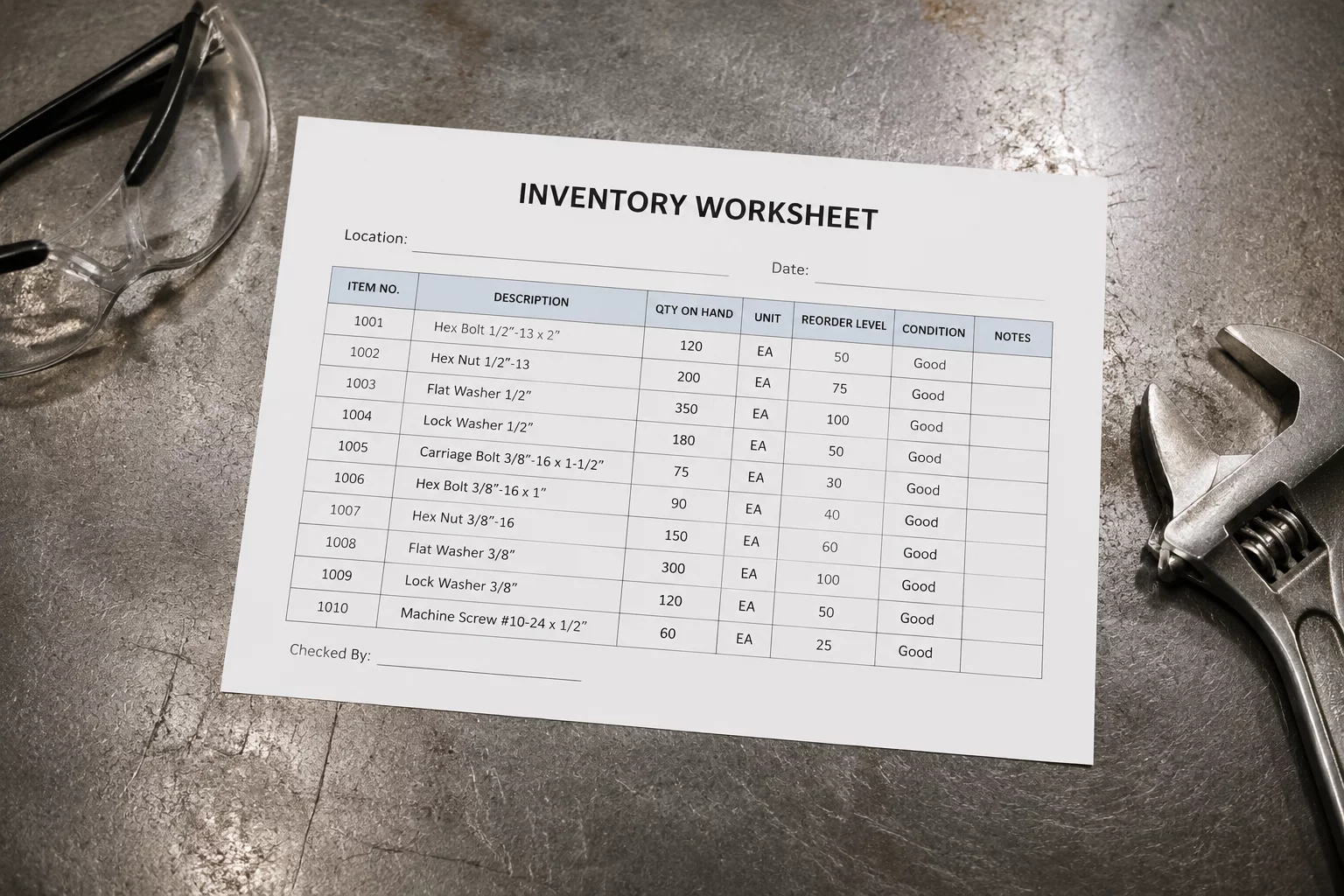 DOC-WS-01
Operational tool to audit consumable travel time, bin footprint, and required line-side capacity.
 DOC-CR-02
Evaluation checklist distinguishing downtime-inducing spare parts from standard operational consumables.
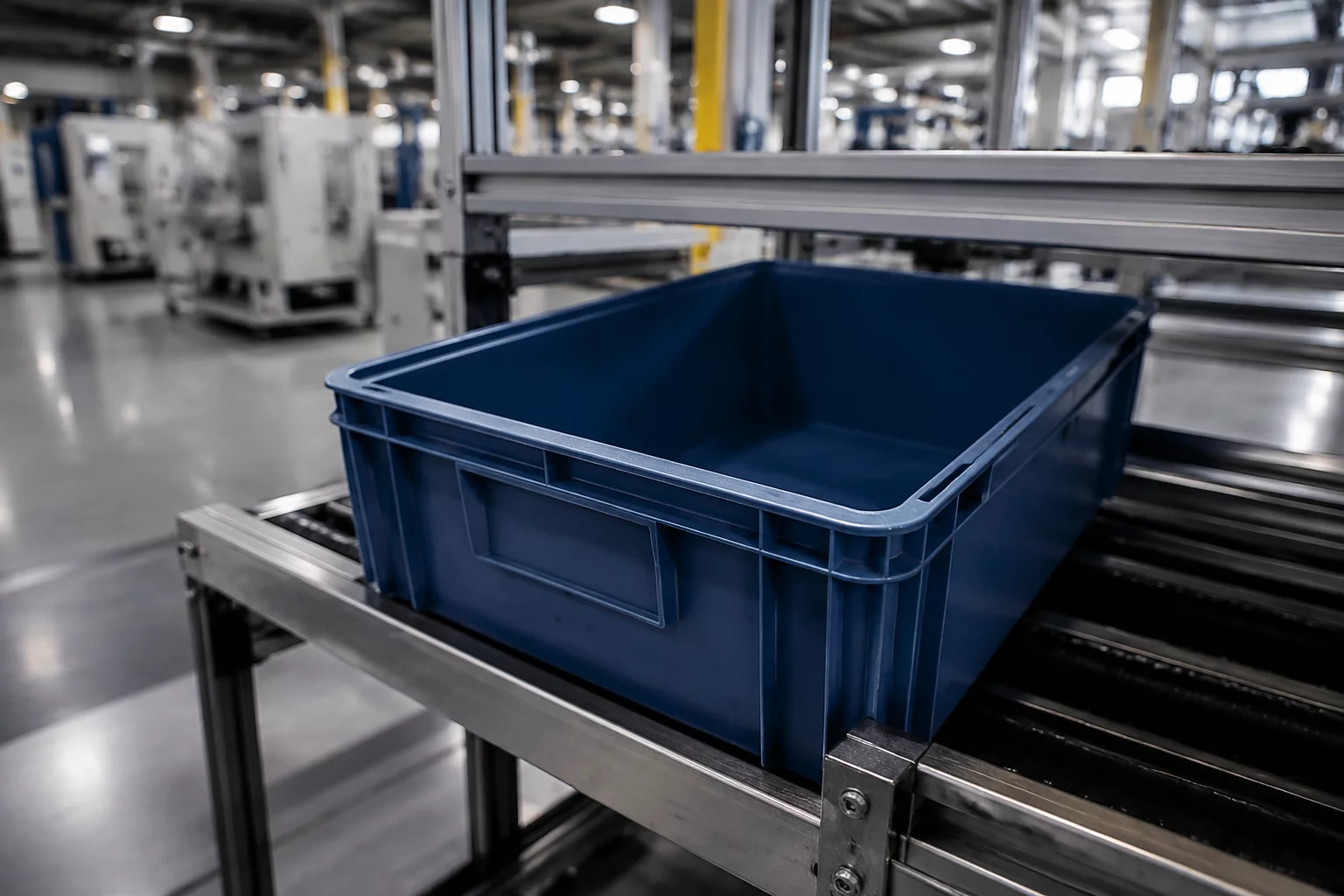 DOC-IA-03
Step-by-step diagnostic questionnaire quantifying financial stoppage risk versus holding storage cost.
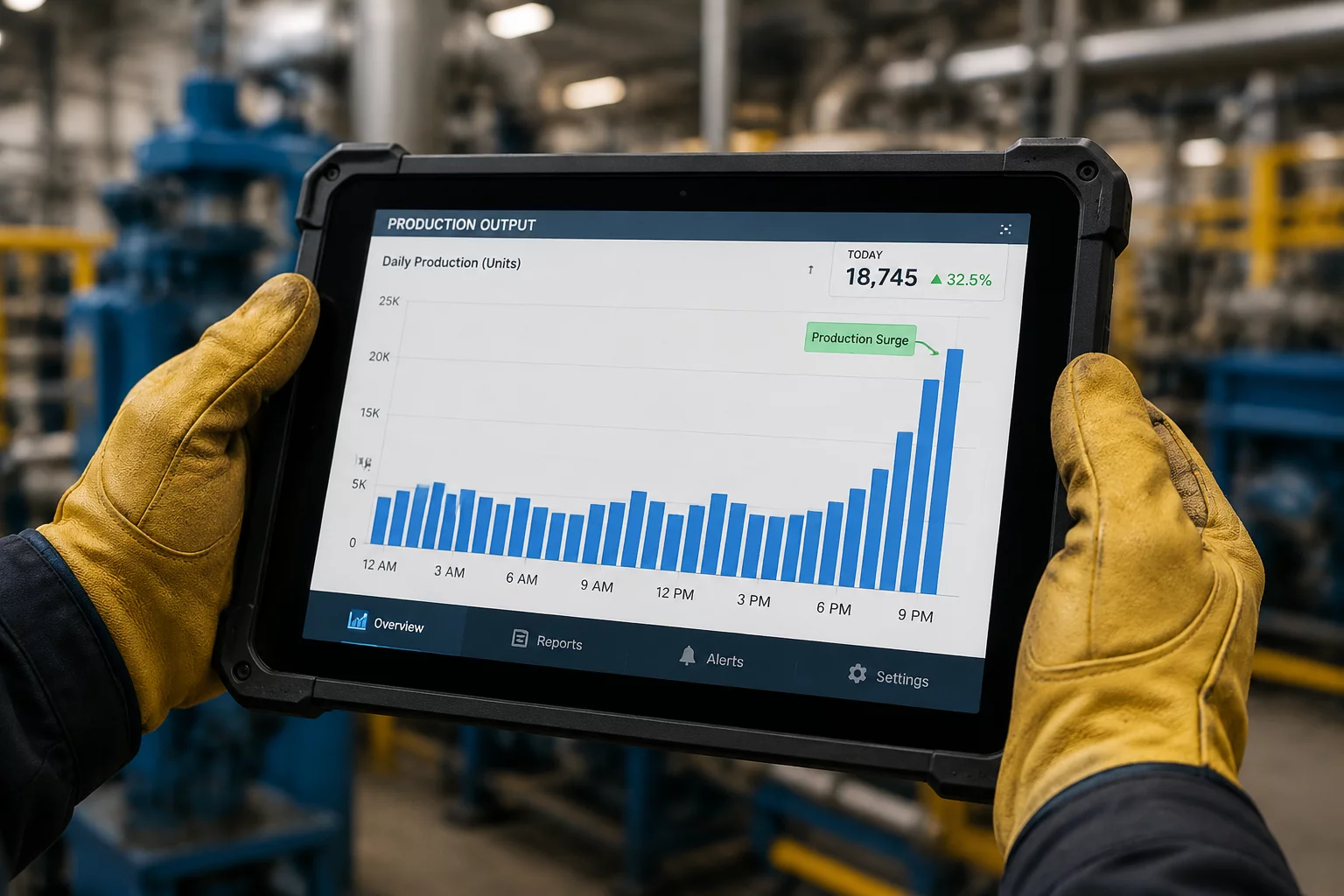 DOC-CS-04
Deep dive analysis on handling unexpected shifts in part burn rate without hoarding excess buffer stock.
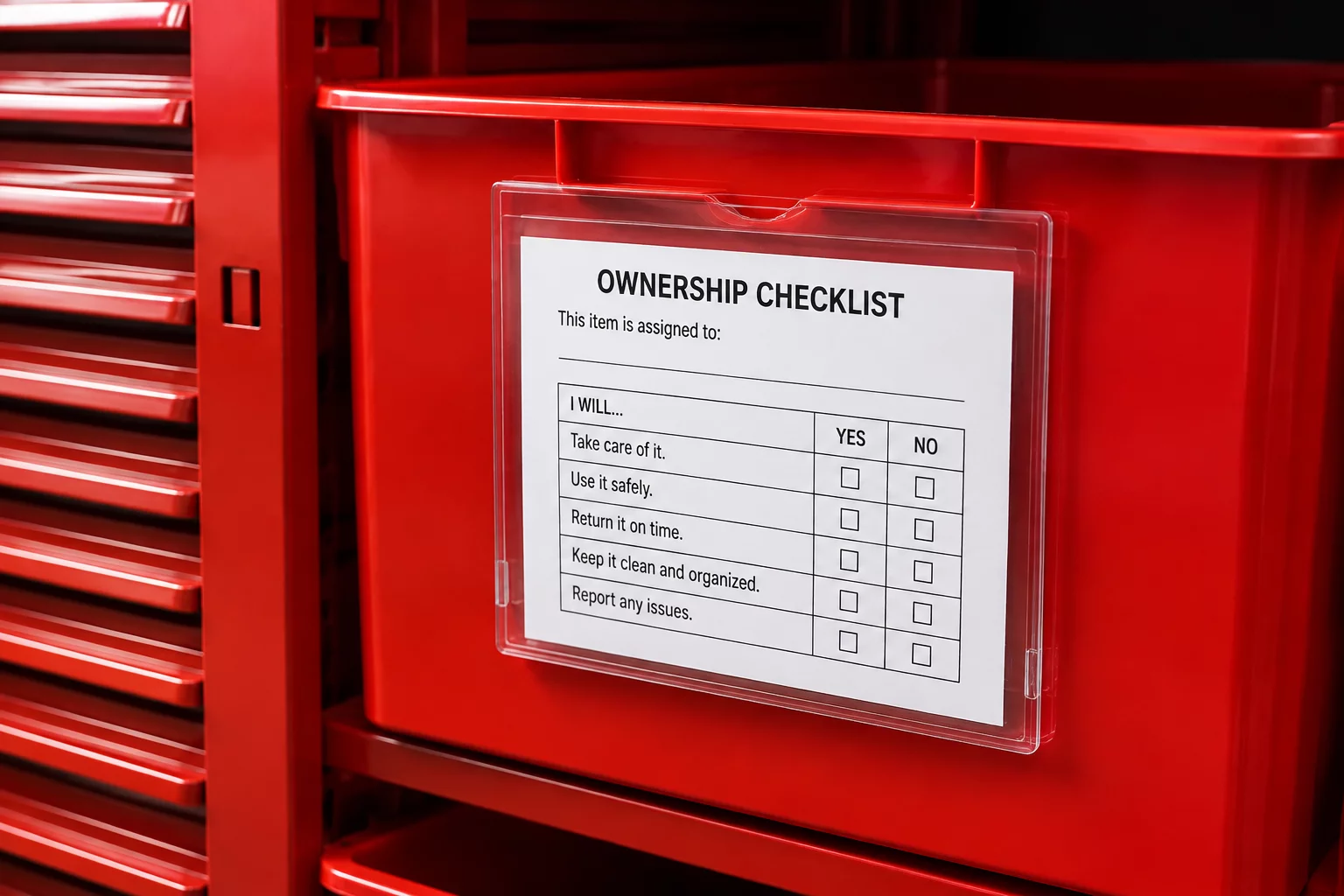 DOC-BO-05
Protocol establishing maintenance vs. central warehouse responsibility for point-of-use bins.
 DOC-RI-06
Mathematical cadence audit matching delivery frequencies to actual machine cycle consumption.
 DOC-OC-07
Diagnostic manual identifying hidden capital drag from overstocked non-critical maintenance supplies.
 DOC-SH-08
Standard operating log protocol to ensure stock status clarity across operating shifts.
Having an item on the facility ledger does not guarantee production availability. When point-of-use inventory is neglected in standard MRO stock planning, routine walk-time transforms minor mechanical adjustments into costly operational outages.
A pneumatic seal fails on primary cell Line-04. The replacement part is confirmed on hand in the central tool crib, requiring a 400-foot round-trip transit through high-traffic staging corridors.
28 minutes elapse between walking, checking out items, and returning to the station. Active machine downtime costs escalate while physical work on the assembly remains frozen.
A following shift retrieves the remaining three backup seals and places them in an unindexed cabinet near Line-02, creating phantom inventory in central records.
Because no individual or shift owns local staging bins at Line-04, no reorder trigger is initiated until the next line stoppage causes an urgent stockout alert.
Stock availability without precise point-of-use allocation is an operational illusion. High-frequency, critical wear items must reside inside the cell perimeter with defined bin ownership.
Toggle the operating architecture below to compare procedural friction, shift reliability, and maintenance throughput.
Fastenal has its own vending/bin-stock/VMI programs, including automated inventory monitoring. StockPoint Fieldbook does not provide these systems, but helps formulate operational questions around stock placement within your Fastenal inventory workflow context.
Automated dispensers and bin scanning record what left the bin. Fieldbook provides the pre-placement logic: item criticality, travel friction, line-side staging thresholds, and replenishment ownership before cabinets are bolted down.
Is this item directly tied to an active assembly stage where a 15-minute stockout causes line shutdown? If yes, bin location must be under 30 meters from station floor.
Standardized fasteners with multi-supplier interchangeability should be monitored for overfill, avoiding floor congestion while maintaining standard safety stock.
Calculate round-trip technician transit time. If daily retrieval exceeds 12 worker-minutes per shift, relocate item to a localized point-of-use cabinet.
Assess whether badge authentication at central vending units introduces shift-start queues on high-turnover PPE and common abrasive discs.
Who is accountable for min/max recalculation when production schedules change? VMI handles restocking, but engineering owns consumption forecast updates.
Ensure informal technician bench hoards are audited and returned to primary point-of-use bins to prevent false zero-stock triggers in monitoring systems.
Industrial inventory terms translated into clear, single-sentence operational definitions for plant teams, maintenance technicians, and buyers.
Locating parts directly beside the machine or workstation where work happens, eliminating transit time to a central warehouse.
A scoring scale measuring how immediately a missing component halts primary production lines versus non-urgent support systems.
The predetermined schedule and cadence at which technician bins are audited, restocked, and verified before shortages occur.
The full financial loss and downtime penalties per hour incurred when equipment stands idle waiting for an unavailable spare part.
The explicit operational assignment of a specific team member to keep a designated stock location organized, labeled, and monitored.
An abrupt, unexpected surge in supply usage that signals hidden machine failure, changed operating cycles, or undocumented scrap.
Working capital and valuable production floor space squandered by holding far more consumable supplies than ongoing operations demand.
A sorting method separating high-frequency daily consumables from slow-moving insurance components to dictate floor placement.
Book a technical walkthrough with MRO inventory specialists. We analyze point-of-use layout, assess consumption telemetry, and establish clear bin ownership rules without software vendor bias.
Point-of-Use Standards Applied Across Industrial Operations
Clarifying assessment limits, analytical deliverables, and operational ownership before initiating on-site MRO point-of-use placement studies.
Mapping exact travel distance, technician retrieval minutes, and cell-level staging requirements across maintenance bays.
Mathematical classification of production downtime penalty per SKU to establish minimum physical stock safety buffers.
Defining clear restocking cadences per bin based on real shift usage patterns rather than arbitrary batch schedules.
Standard operating procedure documentation defining cell supervisor vs. central stores audit ownership.
Variance diagnostic guidelines to flag equipment degradation before catastrophic failure creates supply hoarding.
We do not sell, configure, code, or maintain backend relational database software or enterprise inventory suites.
Physical locker fabrication, helix dispensing hardware leasing, and electrical utility installations are excluded.
We do not act as an MRO wholesale vendor or intermediate component broker. Sourcing remains with your approved vendors.
Evaluations strictly target high-friction industrial maintenance, production tooling, and operational machinery components.
We provide placement logic, engineering rules, and ownership frameworks, but do not provide ongoing floor restocking labor.