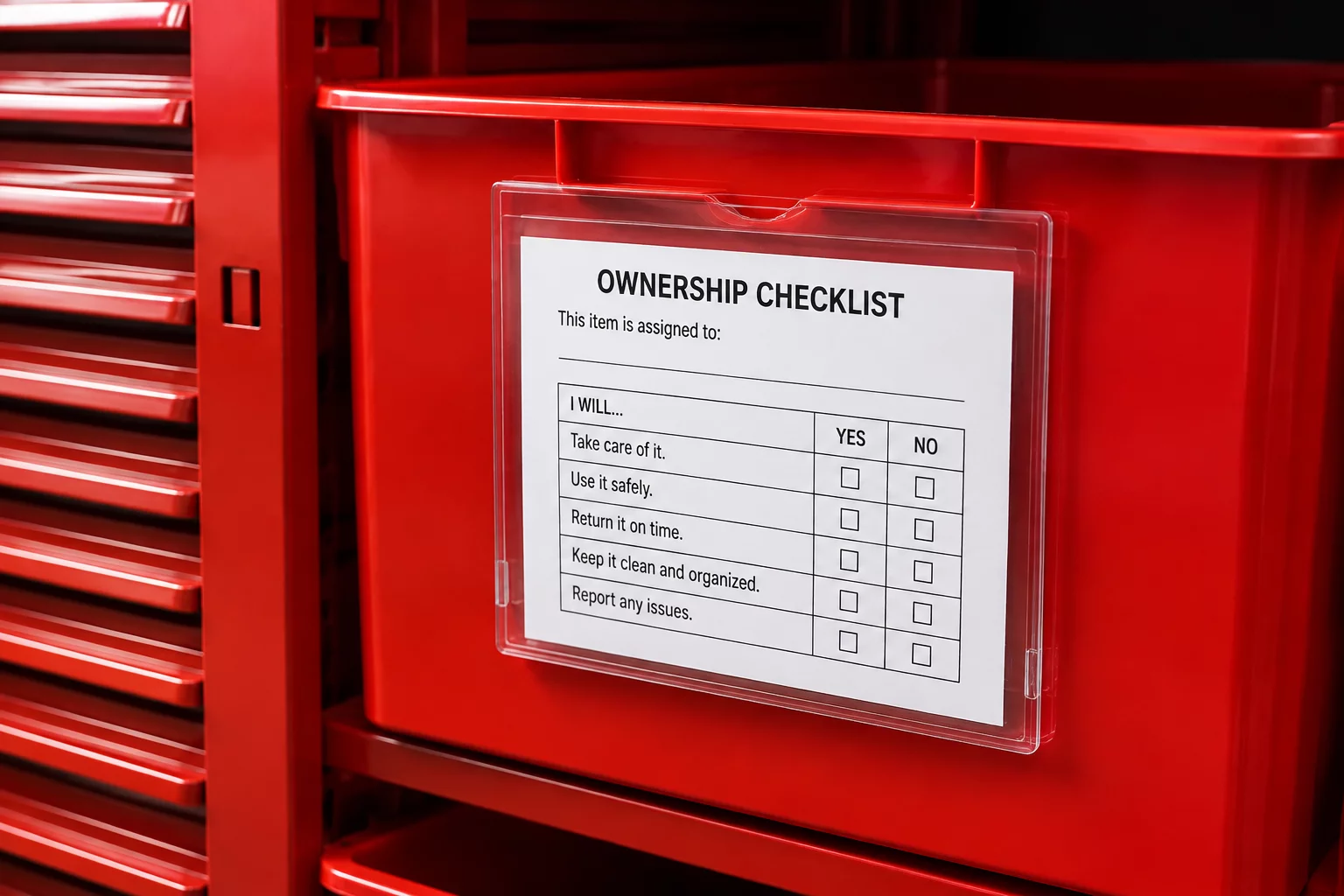
Establishing Clear Point-of-Use Custody Across Plant Cells
Unclear bin ownership on active production floors creates phantom stockouts, duplicate purchase requests, and unmanaged inventory sprawl. When maintenance technicians and production leads lack defined custody boundaries, critical hardware accumulates in unmonitored drawers while primary bins run empty. Designating named bin owners ensures that every container has an assigned steward responsible for verifying physical stock levels, clearing obsolete parts, and triggering replenishment before stockouts impact machine uptime.
Core Governance Rule
Each point-of-use bin cluster requires one primary custodian and one cross-shift deputy. Custody covers container cleanliness, label legibility, minimum threshold scans, and weekly physical verification.
Field Audit Parameters & Allocation Standards
Structuring bin ownership involves aligning physical bin locations with the workcells that directly consume those components. Rather than leaving general shop bins under collective responsibility, line managers audit each station quarterly to balance item velocities, safety margins, and scan routines.
Ownership Architecture Parameters
Primary Bin Custody Verification Checklist
- Validate bin barcode labels, part numbers, and replenishment reorder points against the central inventory register.
- Inspect container cleanliness, separate mixed fastener lots, and remove unauthorized personal or cannibalized parts.
- Verify that actual on-hand quantity matches physical indicator cards or electronic sensor thresholds during each shift handoff.
- Log unexpected consumption spikes immediately to prevent supplier stockout lag on long-lead critical fasteners.
Routine Inspection & Workcell Alignment
Bin owners perform rapid visual sweeps at the beginning and end of each operating shift. Any bin falling below the physical safety trigger line receives an automatic replenishment tag or digital scan. This routine eliminates mid-shift hunting expeditions and keeps technicians focused on production uptime.
Custody Boundaries & Tool Crib Interfaces
Line custodians serve as the designated interface between floor mechanics and central tool crib personnel. When a machine retooling requires non-standard fasteners or sudden volume changes, the bin owner coordinates stock reallocation rather than allowing random hoarding.
Trigger Mechanics & Replenishment Escalation
If a bin drops to emergency buffer levels due to an unplanned maintenance intervention, the custodian flags a priority replenishment ticket directly in the management system. This initiates express picking from central stores or flags vendor restock intervals.
Decision Guidelines & Diagnostic FAQ
The primary bin owner is typically the lead line maintenance technician or workcell supervisor for the primary operational shift, supported by an alternate on the opposing shift to ensure consistent custody log handoffs.
Min/max limits should undergo formal review every 90 days, or immediately following any significant line modification, tooling overhaul, or observed shift in monthly parts turnover.
The bin custodian must isolate unidentified parts into an inspection quarantine tote, verify whether they belong to active tooling bills of materials, and return stray items to the central tool crib within 24 hours.