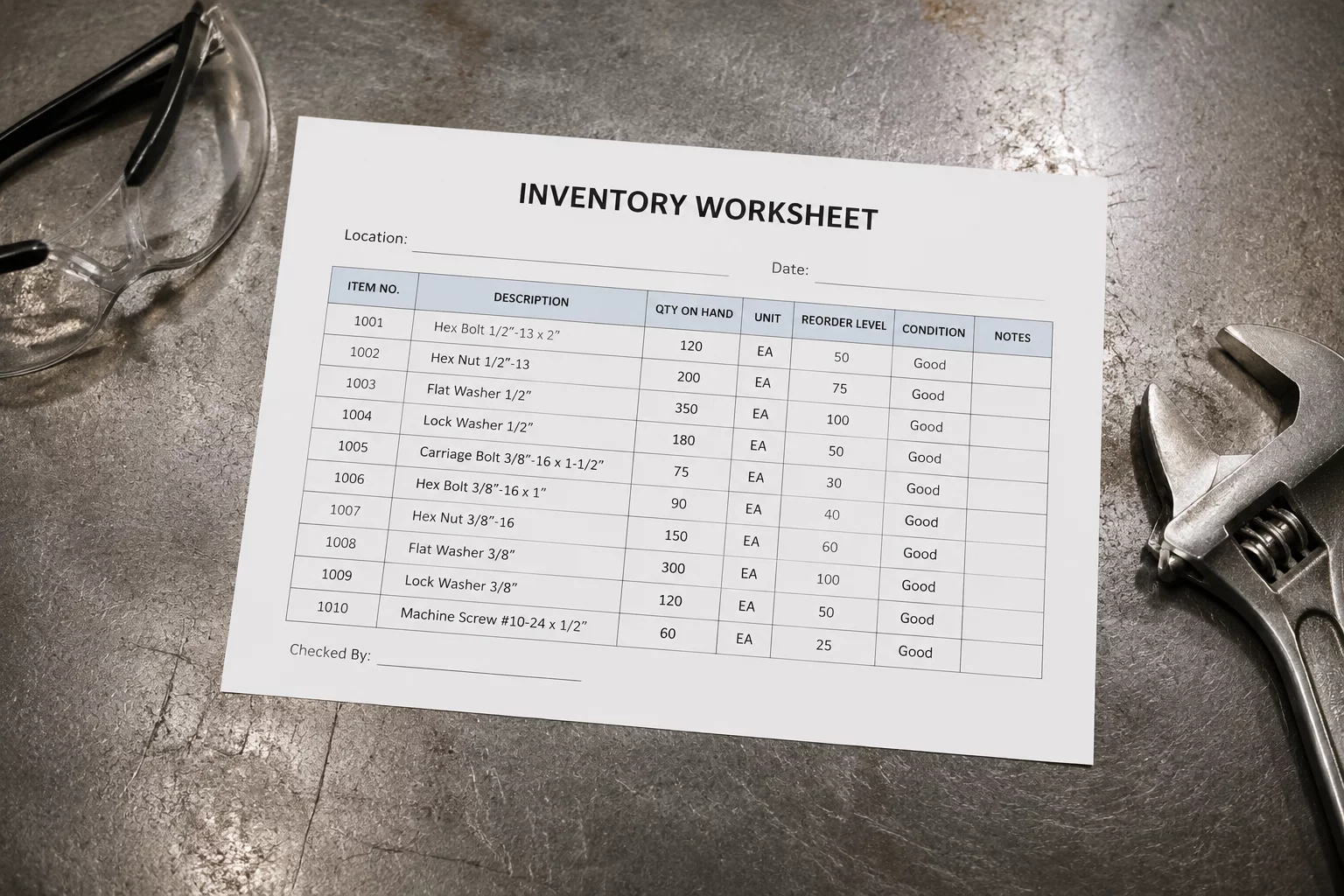
Establishing Reliable Point-of-Use Controls
Placing critical maintenance components directly beside active machinery cuts technician transit time and prevents unscheduled downtime. Without a disciplined tracking worksheet, line-side bins quickly turn into unmonitored stockpiles of obsolete hardware or sudden stockouts. This worksheet standardizes every replenishment trigger, defining exact consumption velocities and floor ownership.
Point-of-Use Placement Rule
Maintain zero unallocated bins. Every bin placed on the factory floor requires a designated technician owner, a documented critical threshold, and direct integration with weekly replenishment routes.
Field Calculation and Criticality Calibration
Calculating bin sizing begins by measuring shift consumption velocity against supplier lead-time buffers. For standard fast-moving fasteners and seals, dual-bin gravity racks offer immediate visual cues. For high-value mechanical assemblies or precision sensors, RFID-tagged secure drawers prevent hoarding while preserving instant point-of-use access.
Point-of-Use Configuration Matrix
Core Steps for Line-Side Stock Assessment
- Audit hourly usage patterns across all manufacturing shifts to identify true consumption velocity.
- Establish strict maximum bin limits to prevent parts accumulation and capital lockup.
- Assign dedicated shift technicians to verify bin contents prior to daily production startup.
- Map physical bin coordinates directly into warehouse management routes for seamless route audits.
Daily Operating Cadence
Operators pull required parts directly from the active primary bin. When the primary container empties, it transfers to the top collection shelf, immediately signaling the route driver to stage replenishment from the central crib.
Security & Custodial Responsibility
Sensitive electronic components and calibration gauges placed at point-of-use must reside in sealed, anti-static compartments. Critical items over defined cost thresholds require badge-authenticated access to ensure inventory traceability.
Dynamic Min-Max Reorder Signals
Reorder points trigger automatically once the reserve bin is breached. The supply management team verifies average consumption spikes every thirty days, adjusting safety buffers to match evolving production schedules.
Decision Guidelines & Diagnostic FAQ
Establish transparent bin capacities matched precisely to weekly consumption rates. Regular route audits and clear visual ownership tags eliminate the incentive for operators to hoard unofficial buffer supplies.
If consumption drops below two issues per quarter, or if the part is susceptible to floor humidity and vibration, return the inventory to central storage and transition to on-demand kitting.
Track technician travel time reduction, line stockout rates, and inventory turn velocity. A balanced deployment typically reduces tool-crib walk time by over sixty percent while maintaining ninety-nine percent part availability.