Streamlining Shop-Floor Material Movement
Downtime drops significantly when maintenance technicians and assembly operators access mission-critical spares within twenty paces of their assigned machinery. Establishing a disciplined operation workflow eliminates uncontrolled material hoarding in personal toolboxes, closes discrepancies between recorded and physical inventory, and enforces standardized routes for replenishment runners.
Operational Rule: Demand Pull Triggers
Replenishment technicians must never push arbitrary batch quantities into satellite storage bins. Material transfers occur strictly against physical kanban signals, barcode scan triggers, or electronic point-of-use decrements.
End-to-End Five-Stage Logistics Loop
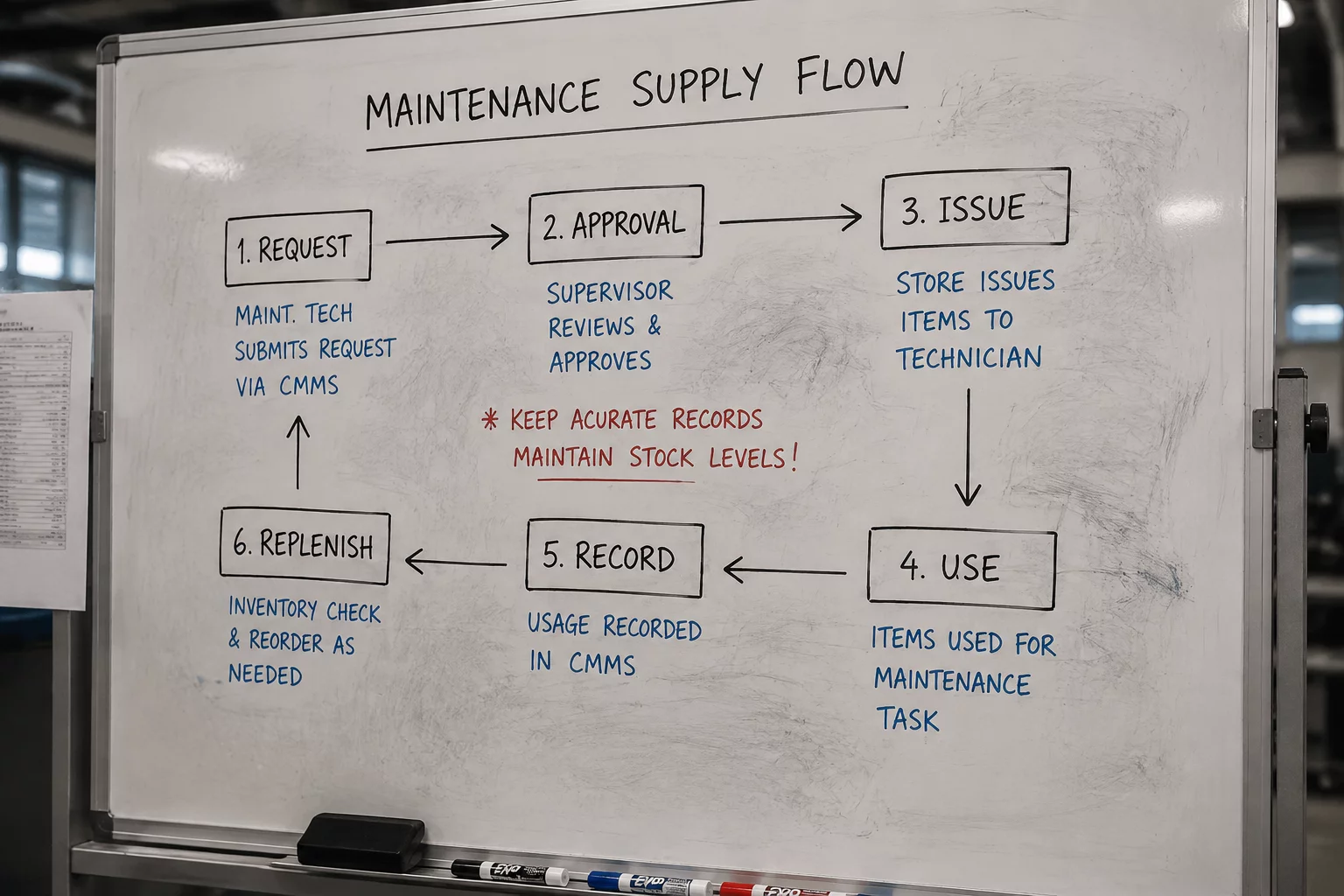
The point-of-use placement structure relies on an uninterrupted cycle encompassing five synchronized actions: staging verification at the central crib, secure cart transfer along marked transit lanes, direct bin docking at the cell rack, live scan validation, and immediate recovery of depleted tote hardware.
Workflow Specifications
Technician Execution Checklist
- Scan point-of-use rack identifier to verify storage slot compatibility before loading.
- Verify minimum and maximum safety stock markers prior to logging the physical restock.
- Stage replacement components without impeding safety aisles or emergency electrical panels.
- Collect empty kanban receptacles and return them promptly to the primary replenishment crib.
Shift Handoff and Route Scheduling
Replenishment runners conduct designated morning and mid-shift delivery routes. Each route follows an optimized layout path, minimizing transit time and eliminating cross-traffic near heavy machinery.
High-Value Assembly Custody
Precision components and high-cost MRO spares require digital badge authentication at the point-of-use enclosure. Fasteners and standard fittings remain accessible in open visual bins with weekly reconciliation.
Signal Escalation Thresholds
When stock levels cross below thirty percent of assigned bin capacity, the digital optical flag changes status, transmitting a priority pull order directly to the main stockroom queue.
Decision Guidelines & Diagnostic FAQ
Technicians flip the physical bin flag to urgent red and scan the rack dispatch QR code. This alerts the crib runner to schedule an expedited replenishment run ahead of regular shift intervals.
Cell operators maintain 5S neatness, part separation, and label clarity at the rack face. Material runners own carton removal, tote sanitization, and transit clearway compliance.
Inventory leads affix an orange status tag noting the verified substitute SKU and revised minimum quantity, keeping the workcell informed while automated purchase orders expedite primary stock.